[01] Case Study
Acts of Holding Dance
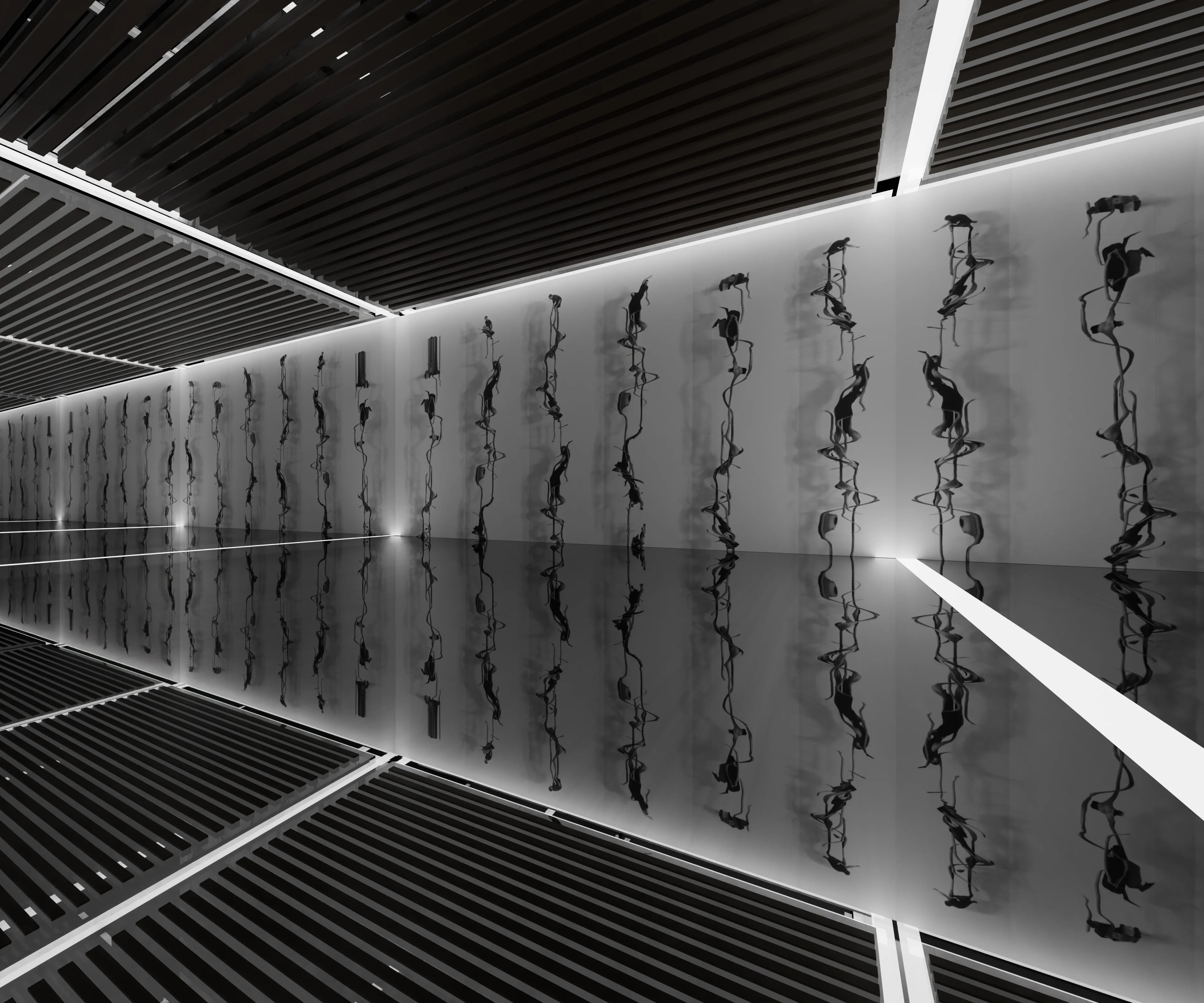
Acts of Holding Dance transforms human movement into persistent visual traces. It turns a static architectural surface into a responsive narrative layer - making choreographic intent and community presence visible over time.
[02] Quick Facts
[03] Creative Intent
The goal was to make dance legible to broader audiences without flattening it. Instead of illustrating a plot, the work visualizes how movement holds time: gestures leave residue, accumulate, and slowly become a map of presence.
Treat movement as memory: traces should persist long enough to be read, but change enough to feel alive.
[04] System Thinking
From body → data → trace
The project is built as a repeatable pipeline: capture movement, extract meaningful motion features, then render them as a visual language tuned for architectural scale. This makes the work portable across venues and adaptable to different choreographic contexts.
[05] Audience Experience
Viewers see a surface that behaves like a living archive: movement appears, lingers, overlaps, and fades. The result is a readable choreography-map that invites curiosity - especially from people who may not “speak” dance.
The system favors clean shapes and temporal contrast so the trace-language can be understood quickly.
Persistence creates tenderness: a feeling that someone was here, and that the space remembers.
[06] What Viewers See
A façade or interior surface that “holds” dance over time - layering motion into a visible memory. The piece reads as both abstraction and documentation: not a story arc, but a durable record of presence.
You understand the premise: movement becomes trace, trace becomes history.