[01] Case Study
Cincinnatus and Beyond
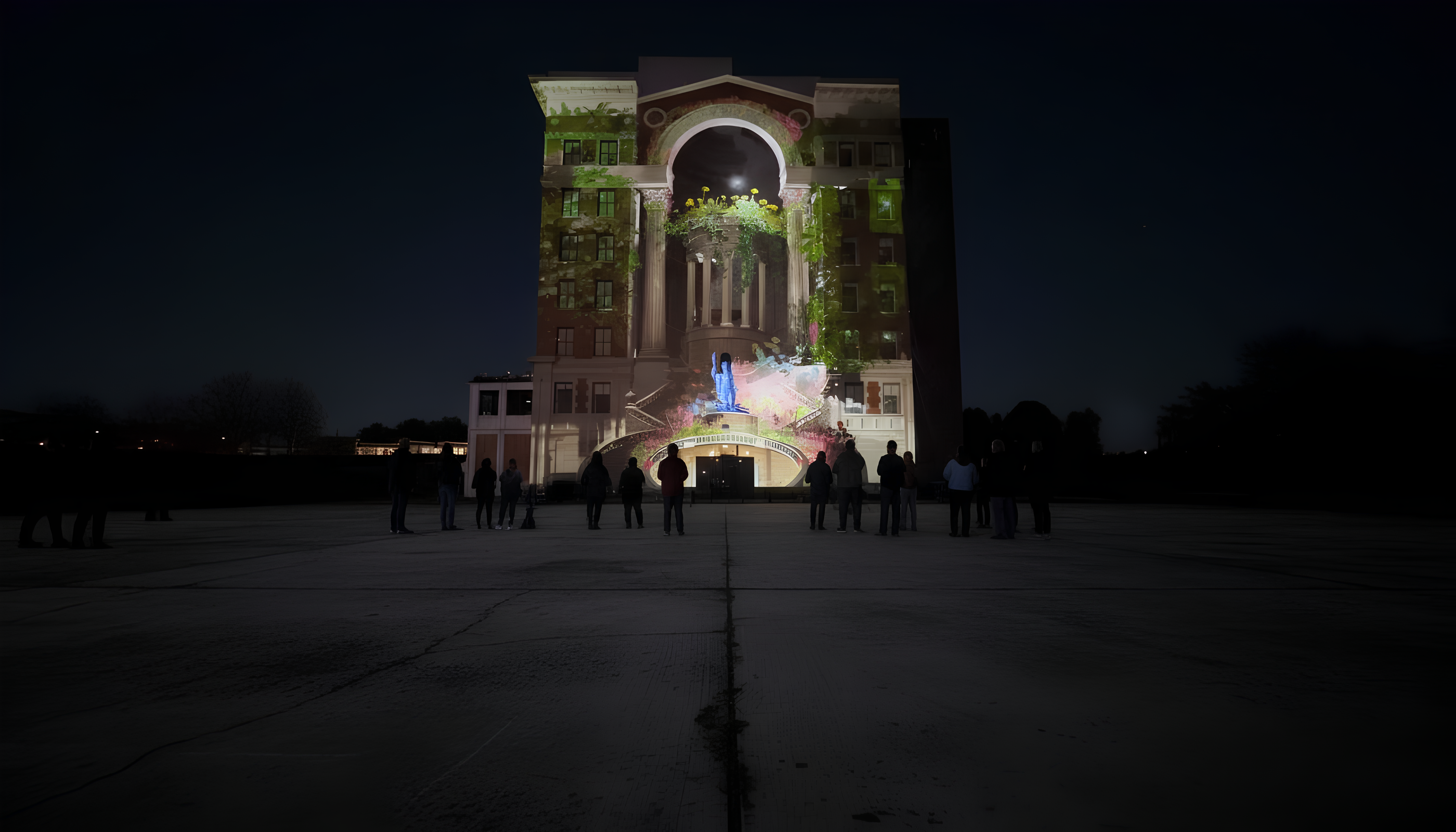
A short projection story about a city legend and a building that becomes alive. It starts with Cincinnatus, then a structure forms, then plants grow through it, and finally the whole surface becomes a living system.
[02] Quick Facts
[03] The Core Idea
Imagine nature taking over a building, bridging one era of human existence into a post human world.
Make the time-jump legible, the viewer should feel like they are seeing this site grow through 1000 years.

[04] Story Structure
Kishotenketsu (no conflict, just transformation)
I used kishotenketsu because the work doesn’t show a battle. It shows a peaceful evolution where nature and architecture become one.
[05] Inspiration
I pulled from three visual worlds: civic myth, architectural drawing, and botanical growth. The goal was a projection language that reads from far away, respects the building, and still feels alive.
A legend needs simple symbols and strong silhouettes. I aimed for "readable from the street" imagery before detail.
The building beat uses blueprint logic: lines, grids, and measured movement that “fits” the façade rather than fighting it.
.jpg)
[06] What Viewers See
A familiar building that changes before the viewer's eyes. The story starts with illuminating the building, then transofmring it into a living facade.
You still get a full idea: the piece has a start, a turn, and a clean “new world” at the end.